Bob Paisley became Liverpool manager in 1974 after Bill Shankly’s retirement and went on to oversee one of the most successful periods in the club’s history.
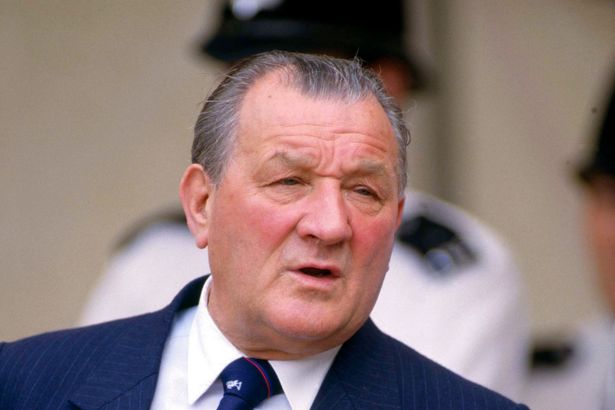
From the Boot Room to the Manager’s Office
Paisley had served Liverpool in multiple roles before succeeding Shankly. The club’s official history describes him as a reluctant manager who was more comfortable away from the spotlight, but whose knowledge of football and ability to identify players proved exceptional.
That is a more useful way to understand his leadership than the exaggerated image of an “iron-fisted” boss. Accounts of Paisley frequently emphasise his quiet manner, sharp judgement and deep understanding of the game rather than theatrical confrontation.
Nine Seasons of Major Success
Between 1974 and 1983, Liverpool won six league titles under Paisley. His teams also lifted the European Cup in 1977, 1978 and 1981, as well as the UEFA Cup in 1976 and three successive League Cups from 1981 to 1983.
The scale of that record made Paisley one of the defining managers in Liverpool history. His success was built on continuity from the Shankly era, strong recruitment, tactical judgement and a backroom culture that had developed over many years.
A Legacy Bigger Than the Stereotype
Paisley’s reputation does not need sensational language to make it compelling. His achievements speak for themselves, while his understated public style remains part of what makes his story distinctive.
The original version of this article portrayed Paisley as a fear-driven, “iron-fisted” manager and presented unsupported claims about players being frozen out or ruled through intimidation. Those descriptions have been removed in favour of a profile grounded in Liverpool FC’s documented history.