
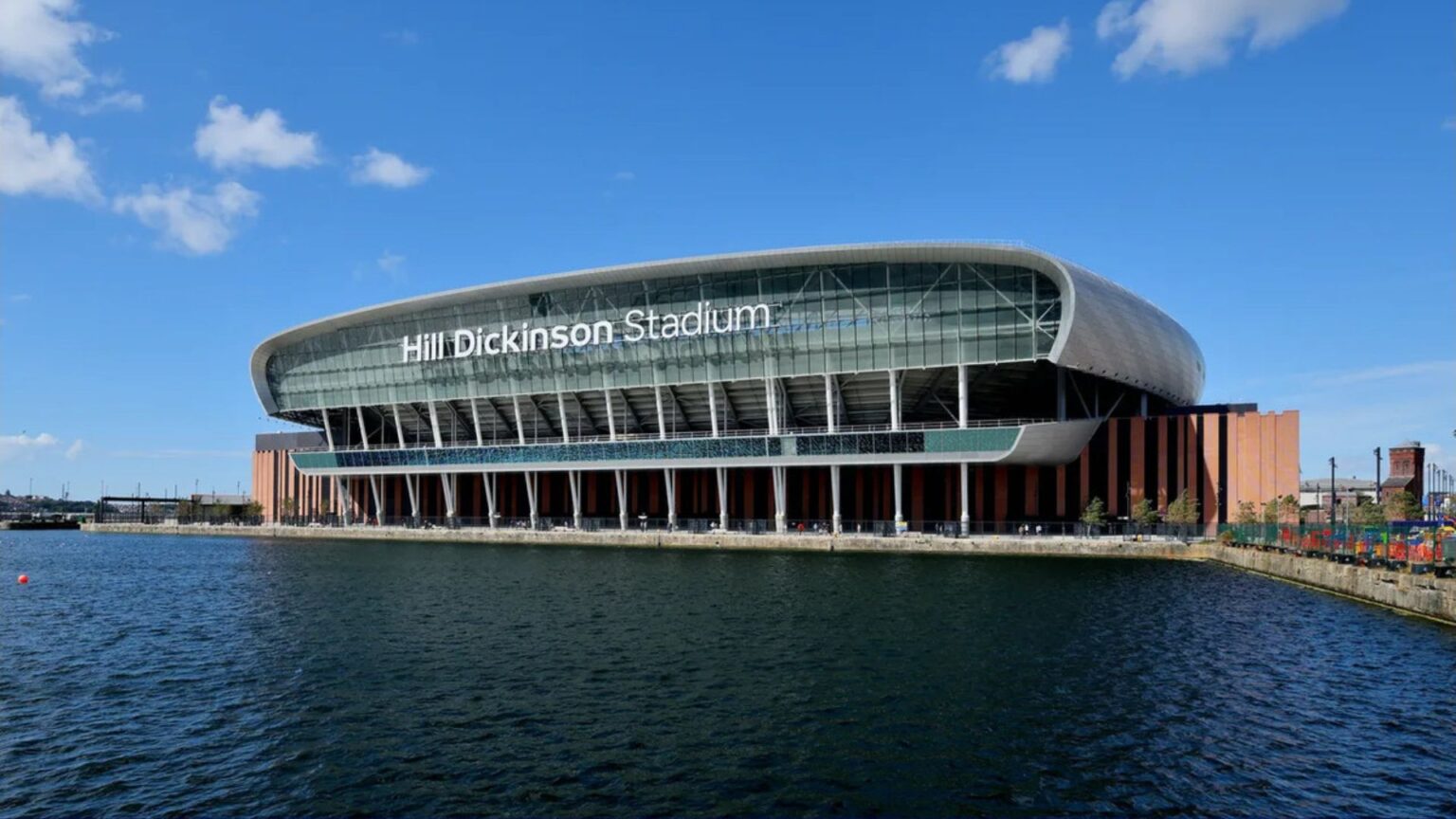
Liverpool residents and businesses have until the end of Monday, 17 August, to respond to a council consultation on revised parking measures around Everton’s Hill Dickinson Stadium at Bramley-Moore Dock.
The consultation is the latest stage in a long-running attempt to manage match-day and event traffic around the waterfront venue. Liverpool City Council says the revised scheme is intended to balance access for residents and businesses with the additional demand created by large events at the stadium.
What the consultation covers
The current exercise concerns revised parking controls around Bramley-Moore Dock. The wider scheme has included residents’ permit areas, industrial parking zones, taxi ranks, match-day bus stands and changes to the operating hours of existing restrictions in nearby districts.
The council’s consultation page lists Monday, 17 August 2026 as the closing date. Residents, businesses and others affected by the controls can submit views before the consultation ends through the Liverpool City Council consultation service.
The issue matters beyond supporters travelling to the stadium. Parking controls can affect people living within the surrounding streets, employees arriving at businesses near the docks and firms that depend on vehicle access during event days.
A scheme shaped by previous feedback
The parking arrangements around the stadium have already changed in response to public and business feedback. Earlier council engagement covered an area within roughly a 30-minute walk of the venue and considered measures ranging from residential permits to dedicated taxi and bus locations.
A previous consultation found broad support for some elements, including residential permit zones, taxi ranks and match-day bus stands, while operating hours and industrial parking arrangements attracted more divided responses. The council subsequently said concerns around the cost and availability of business permits needed further assessment.
The scheme was later reviewed after its early operation around stadium test events. Liverpool Chamber reported in March 2025 that more than 5,000 responses had already been received during that phase of the process, with an updated traffic order expected before regular football fixtures began at the new venue. The council later amended measures following feedback from nearby communities and businesses.
How event-day controls work
Liverpool City Council now uses designated “event days” for parking and traffic restrictions around major football fixtures and other large events. Its current guidance says controls can apply around Hill Dickinson Stadium when attendance is expected to exceed 10,000, as well as for other major city events where additional traffic management is required.
The system is designed to concentrate restrictions on the periods when demand is highest rather than applying the same controls every day. Signs in affected areas display forthcoming event dates, while the council publishes maps showing where permits and restrictions apply.
For local firms, the practical question is whether the revised arrangements provide enough protection against event-day congestion without making routine access unnecessarily difficult. For residents, the central concern is often whether streets close to the stadium can be protected from displacement parking as crowds arrive.
What happens after the deadline
The close of consultation does not itself mean every proposed change will automatically take effect. Responses must be considered as the council decides whether further amendments are needed and how the parking framework should operate around future events.
The history of the scheme suggests that feedback can produce changes. The council has previously adjusted parking rules and traffic-management arrangements after residents, businesses and supporters raised practical concerns during consultation and test events.
For anyone directly affected by the revised measures, Monday’s deadline is therefore the final opportunity in this consultation round to put those concerns formally on record.
Sources: Liverpool City Council; Liverpool Chamber of Commerce.