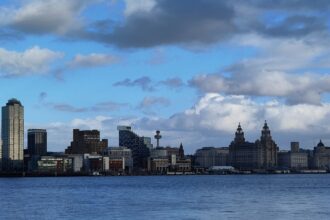



remote and hybrid work in Liverpool has fundamentally altered the economic geography of Merseyside, shifting how local enterprises operate, how commercial real estate is valued, and how professionals navigate daily life. As businesses across the Liverpool City Region adapt to structural labour market changes, leaders must evaluate the operational, logistical, and spatial consequences of decoupled workplaces. Rather than viewing flexibility as a temporary adjustment, strategic operators now treat distributed models as a permanent variable in regional commerce. This shift impacts everything from municipal transport patterns to talent acquisition across the North West. The Liverpool Bulletin team prepared this guide for you.
How does remote and hybrid work in Liverpool impact the local economy and urban landscape?

remote and hybrid work in Liverpool influences commercial property demand, commuter transit revenues, and urban micro-economies within the city centre and surrounding boroughs. National data frameworks from bodies like the Office for National Statistics (ONS, 2024) provide a baseline for understanding homeworking trends, but local execution depends heavily on sector-specific dynamics found across Merseyside. Employers balancing home-based arrangements and traditional offices face complex decisions regarding lease liabilities, regional recruitment pools, and employee expectations. Understanding these shifts requires separating broader UK economic currents from the unique commercial realities of Liverpool.
As a strategic consultant, I advise business owners to view distributed work through a structural lens rather than treating it as an HR perk. Local enterprises, ranging from emerging tech ecosystems to established professional services, must align their physical footprint with genuine operational necessity. When commercial lease obligations no longer match actual headcounts, capital can be reallocated toward digital infrastructure or employee development. However, abandoning physical spaces entirely can erode spontaneous collaboration and institutional culture, which remains vital for long-term resilience.
Assessing Commercial Real Estate and Office Demand
The contraction of traditional office demand in central Liverpool reflects a wider UK commercial property readjustment, though local variations persist. Landlords and property developers in the Baltic Triangle and the Commercial District are increasingly pivoting toward flexible, multi-use spaces that accommodate fluctuating team sizes. Organizations are downsizing large, permanent headquarters in favour of smaller, high-specification hubs designed for collaborative project work rather than daily individual task execution. This evolution affects city-centre footfall, directly impacting hospitality venues, independent retailers, and transport networks that relied on five-day-a-week commuting routines (CIPD, 2023).
Navigating this property transition requires a methodical approach. Business leaders should consider the following spatial planning principles:
- Audit actual desk utilization rates over a representative six-month operational cycle.
- Negotiate flexible lease terms that allow for square-footage adjustments as team models mature.
- Invest in secure, cloud-based infrastructure to support seamless transitions between home and office environments.
- Evaluate the proximity of regional transport links, such as Merseyrail stations, when selecting new office locations.
Recruitment Dynamics and Regional Labour Markets
The normalisation of distributed models has expanded recruitment boundaries for Liverpool-based enterprises while simultaneously exposing local employers to national competition. Firms can now source specialized talent from across the Liverpool City Region and beyond without requiring relocation, widening the available skills pool. Concurrently, local professionals can secure remote roles with London- or international-headquartered organisations while remaining rooted in Merseyside. This creates both an opportunity for inclusive hiring and a retention challenge for regional businesses competing on compensation packages and workplace culture.
To maintain a competitive edge in recruitment, local enterprises must look beyond basic remote-work policies and address holistic support structures. As noted in recent regional labor assessments (Liverpool City Region Combined Authority, 2024), sustainable growth relies on matching flexibility with clear professional pathways. For instance, pairing remote flexibility with structured internal training frameworks—similar to regional apprenticeships—ensures that junior staff do not miss out on vital mentorship. Strategic workforce planning must account for both geographic reach and localized team cohesion.
Key Steps to Take
- Define clear expectations regarding core hours, asynchronous communication, and physical attendance requirements.
- Assess current IT security protocols to ensure remote data access complies with regulatory standards.
- Gather anonymous feedback from team members regarding their productivity, wellbeing, and commute burdens.
- Review management training programs to ensure supervisors can lead effectively across distributed environments.
- Monitor regional economic reports and commercial property forecasts to anticipate future cost shifts.
Managing distributed teams successfully requires continuous refinement, transparent communication, and a clear understanding of regional economic conditions. By balancing spatial efficiency with employee wellbeing, Liverpool businesses can build resilient operations that thrive amid ongoing structural change. You can contact us for any questions.
References:
- CIPD. (2023). Flexible Working: Current Trends and Practical Considerations. London: Chartered Institute of Personnel and Development.
- Liverpool City Region Combined Authority. (2024). Regional Economic Assessment and Labour Market Dynamics. Liverpool: LCRCA.
- Office for National Statistics (ONS). (2024). Homeworking and Remote Employment Across UK Regions. Newport: ONS.